
Why Waiting for Confirmation Is One of the Most Profitable Habits in Trading
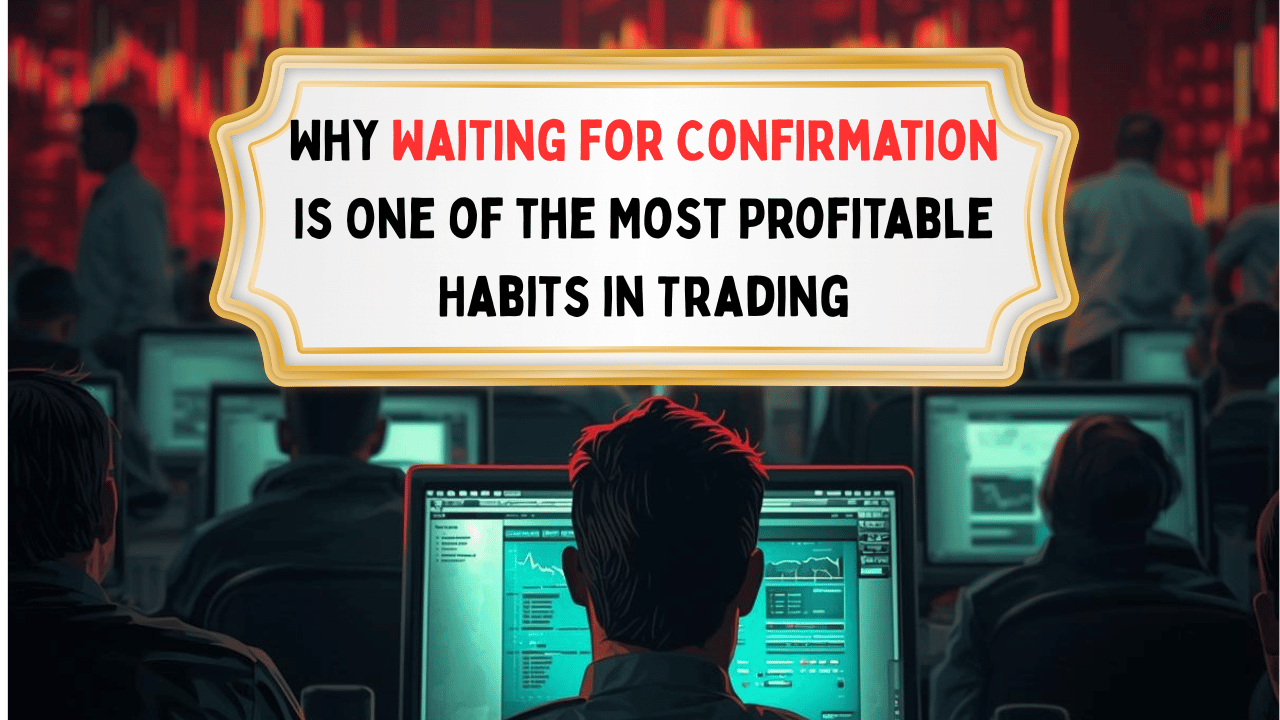
The Urge to Get In Early
Most traders have experienced this.
Price starts moving.
You recognise the setup.
And there’s a strong urge to get in early.
You don’t want to miss the move.
You don’t want to be late.
So you enter before confirmation.
Sometimes it works.
But over time, this habit becomes costly.
Why Entering Early Feels Right
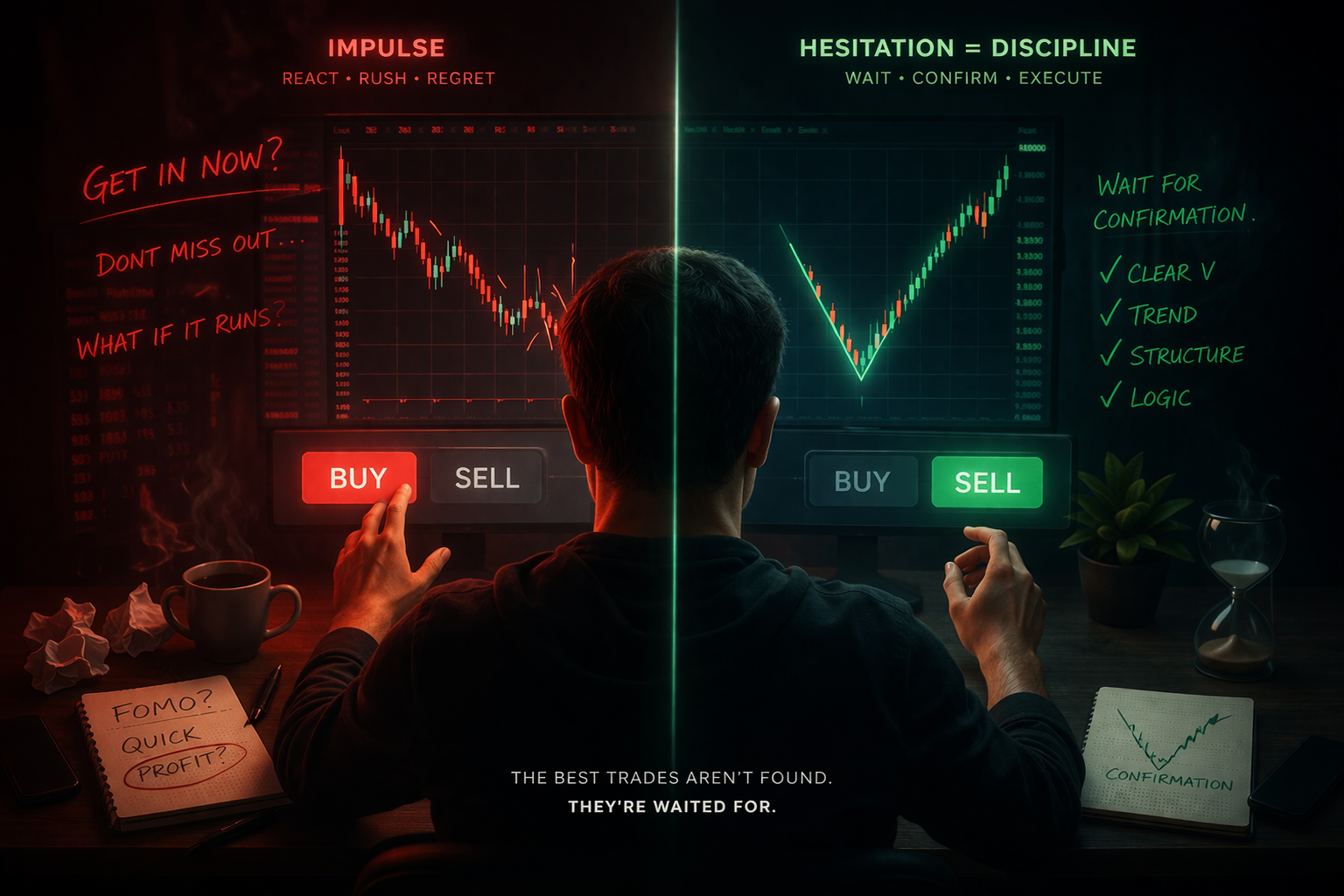
Entering early feels logical.
You think:
- “I’ll get a better price”
- “I’ll maximise my profit”
- “I already know where this is going”
But what you’re actually doing is removing structure from your trade.
You’re making a decision before the market has confirmed anything.
And that changes everything.
What Confirmation Actually Gives You
Waiting for confirmation, especially after a V formation, does something important.
It gives your trade structure.
And that comes with several advantages.
By waiting, you’re no longer trading a theory, you're trading the reality that's playing out on the charts.
You Gain a Logical Stop Loss
Once a V formation is established, you now have a clear reference point.
Your stop loss isn’t arbitrary.
It’s based on structure.
That means:
- your risk is defined
- your trade idea is clear
- your invalidation point makes sense
Without confirmation, your stop is often based on assumption.
With confirmation, it’s based on logic.
You’re Trading With Momentum Again
After a V formation, the market has already shown its intent.
You’re no longer trying to predict the turn.
You’re joining it.
This aligns you with:
- momentum
- the trend
- the intentions of the big players
Instead of swimming upstream, you’re going with the flow.
You Eliminate Low-Probability Trades
A useful parallel here is poker.
Experienced poker players understand that long-term profitability doesn't come from playing more hands. It comes from being selective.
Weak hands are folded, not because they can never win, but because they are not worth committing capital to over time.
Trading is similar.
By waiting for confirmation, you are not trying to predict every move.
You are becoming more selective about which moves deserve your risk.
That means fewer weak entries, fewer premature trades, and fewer situations where you are relying on hope rather than structure.
You are improving your odds not by chasing every opportunity, but by removing more of the low-quality ones.

Price Isn’t the Advantage, Structure Is
One of the biggest misconceptions is this:
“Entering earlier gives me a better price.”
Sometimes that’s true.
But often, the price difference is small.
What changes significantly is the quality of the trade.
You might enter slightly later…
But now:
- your stop loss is logical
- your direction is confirmed
- your probability is improved
The expected value of the trade changes.
Not because of price.
But because of structure.
The Habit to Build
This is where it becomes practical.
Instead of trying to fix everything in your trading, focus on one habit:
- Avoid buying the falling knife
- Wait for clear confirmation
- Only trade after the V formation
- Place your stop loss based on that structure
This shifts your approach from reactive to structured.
Try This for One Day
A simple way to test this is.
For one trading session, commit to this rule:
No trades until confirmation is clearly formed.
Then review your behaviour honestly.
Ask yourself:
- Did I wait for confirmation?
- Did I enter early anyway?
- What was I feeling in that moment?
If you didn’t follow it, that’s valuable information.
Because now you have awareness.
And that’s where improvement starts.
Where the Real Work Happens
Once you become aware, you can start to refine.
If you didn’t follow the habit, ask:
- Was it a knowledge issue?
→ Did I misread the structure? - Was it an execution issue?
→ Did I know, but still entered early? - Was it emotional?
→ Was I impatient, excited, or afraid to miss out?
Each answer leads to a different improvement.
But none of it happens without awareness first.
Making It Visible
Understanding the habit is one thing.
Actually applying it consistently is where most traders struggle.
A simple way to approach this is to make the habit visible and measurable.
For example, you can structure it like this:
Step 1 — Define the habit clearly
- Avoid buying into a falling move
- Wait for clear confirmation
- Only trade after the V formation
- Place your stop loss based on structure
Step 2 — Track it during the session
As you trade, check your list of habits to see if you are actually following them in real time.
Not based on the outcome, but based on your behaviour.

Step 3 — Review it at the end of the day
At the end of your session, look back, asses and grade yourself honestly:
- Did I follow this consistently?
- Where did I break it?
- Why did I break it?
This is where patterns start to become clear. Over time, you stop guessing.
You start seeing exactly what you’re repeating.
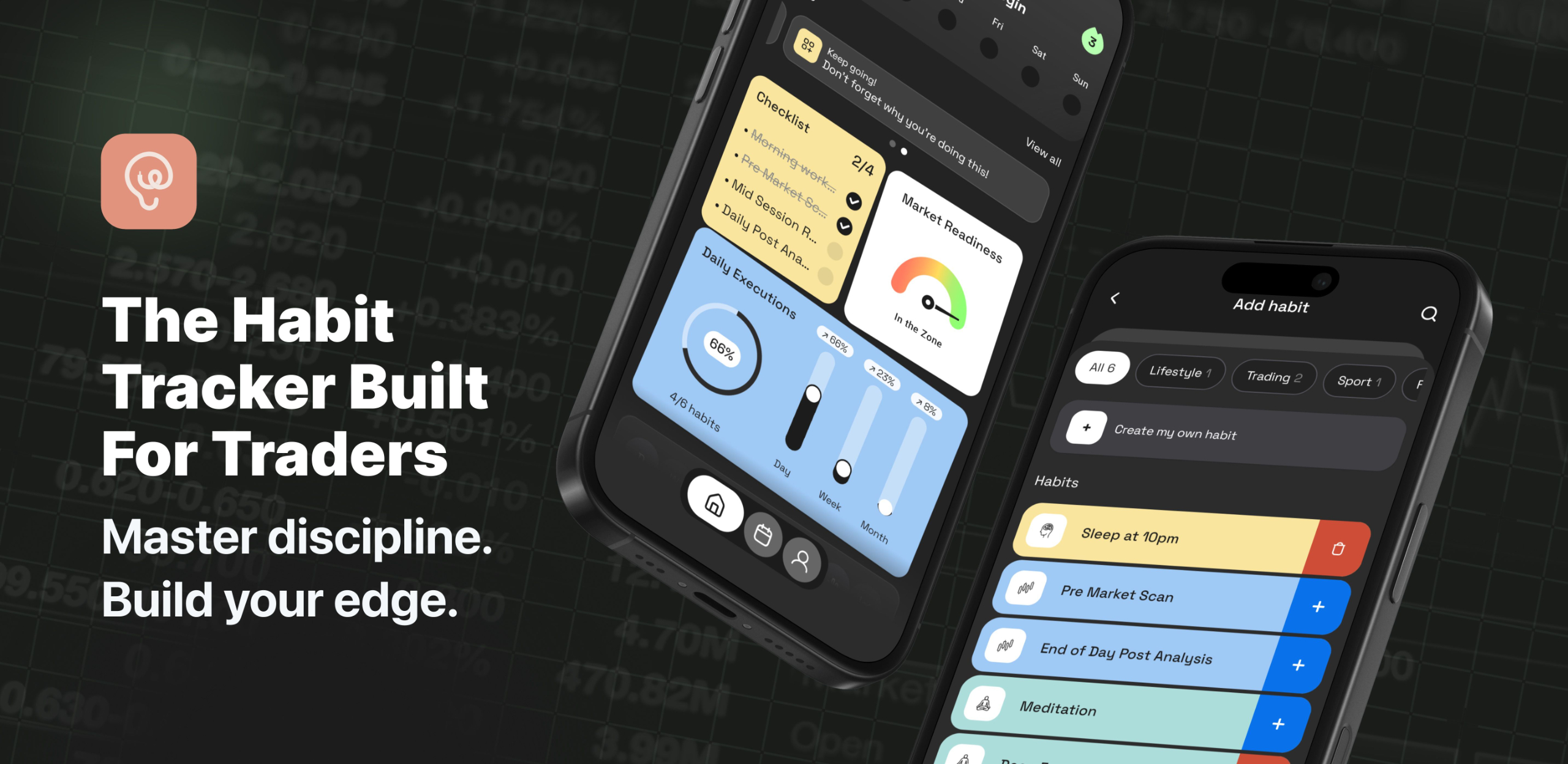
Some traders use simple habit tracking tools to make this easier and more structured over time.
👉 You can explore one way to do that here using Brain Equity app
Final Thought
Waiting for confirmation doesn’t guarantee a winning trade.
But it improves the quality of your decisions.
And over time, that’s what matters.
Because in trading, consistency doesn’t come from catching every move.
It comes from repeating better decisions.
With Pip Love,
Navin Prithyani
Try Brain Equity Free for 1 Month

Receive Navin Prithyani's Free Foundational Course

Categories
All Categories